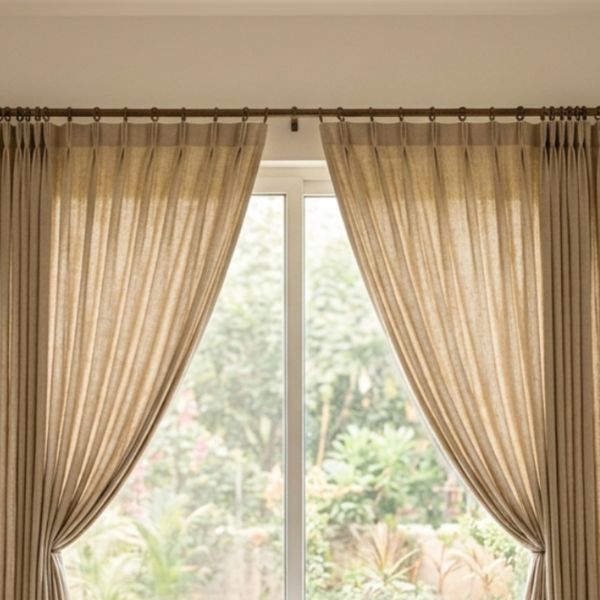
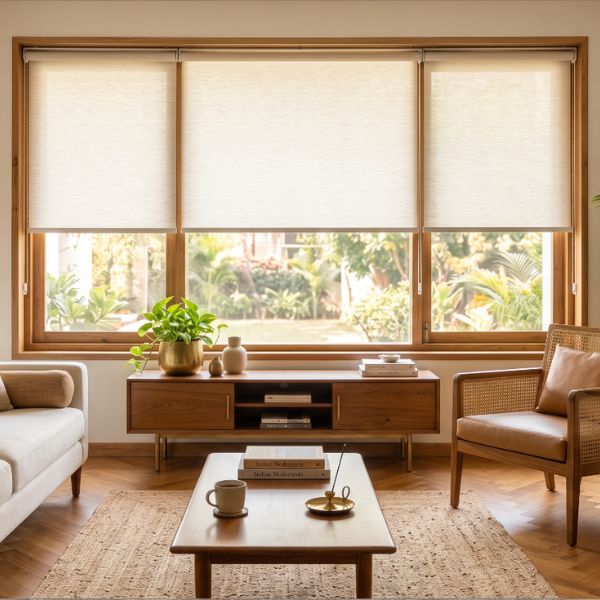
When buying curtains, most homeowners begin with the fabric and colour. While both matter, they are only part of what determines whether curtains look well-fitted and polished.
Curtain height, width, fullness, pleat style, lining, hardware and installation all affect the final result. This is where the difference between ready-made curtains and customised curtains becomes important.
Ready-made curtains offer convenience, faster availability and predictable pricing. Customised curtains, also called made-to-measure curtains, offer greater control over measurements, styling and installation.
Are Ready-Made or Custom Curtains Better?
Ready-made curtains are a practical choice for standard-sized windows, rental homes, quick makeovers and tighter budgets. Customised curtains are generally better for permanent homes, unusually sized windows and rooms where precise fit, fullness and finish are important.
The best option depends on your budget, timeline, window dimensions and how finished you want the room to look.
What Are Ready-Made Curtains?
Ready-made curtains are pre-stitched curtains manufactured in standard widths and lengths. They are commonly available in fixed heights such as seven, eight or nine feet.
Because they are already stitched, they can usually be purchased and installed quickly. They are widely available online and in stores, making it easier to compare styles, prices and customer reviews.
Ready-made curtains also offer several genuine advantages.
They usually cost less initially than fully customised curtains. You can see the finished design before purchasing, and many styles are available for immediate delivery. They can also be moved from one room or home to another if the dimensions are similar.
For rental homes, guest rooms, temporary spaces or standard-sized windows, ready-made curtains can be a sensible and attractive option.
The main limitation is that the available dimensions, pleat styles, lining and fullness may not precisely match every window or interior.

What Are Customised Curtains?
Customised curtains are measured, designed and stitched specifically for your windows.
The curtain height, width, pleat style, fabric, lining, fullness and hardware can all be planned according to the room. This allows the curtains to complement the proportions of the space rather than simply cover the window.
For example, custom curtains can be installed closer to the ceiling to visually increase the room’s height. The track can also extend beyond the window frame, helping the window appear wider and allowing more daylight to enter when the curtains are open.

Ready-Made Curtains vs Custom Curtains: Key Differences
1. Curtain Fit and Size
Curtain size has a major influence on the final appearance of a room.
Ready-made curtains are produced in standard lengths. They work well when your window and ceiling height closely match the available dimensions. However, homes often have ceiling heights such as eight and a half, ten or eleven feet, which may not align with standard curtain sizes.
This can result in curtains ending slightly above the floor, gathering more than intended or being installed lower than the ideal position.
Customised curtains are measured according to the exact height and width of the space. They can be designed to sit just above the floor, lightly touch it or create a controlled puddled effect.
The width is also calculated according to the track and desired fullness, helping the curtains fall more evenly.

2. Fullness and Curtain Folds
The amount of fabric used across the width of the window affects how full the curtains appear.
Ready-made curtains come with a predetermined panel width. Depending on the window and the number of panels used, they may look either appropriately full or slightly flatter than expected.
This does not mean that all ready-made curtains use insufficient fabric. Many well-designed options provide good fullness when the correct number of panels is selected.
However, the fullness ratio cannot usually be adjusted.
With custom curtains, the fabric quantity is calculated according to the track width, fabric weight and pleat style. A lightweight sheer may require a different fullness ratio from a heavy blackout curtain.
This makes it easier to achieve deeper and more consistent folds.
3. Curtain Height and Placement
Where the curtain is installed can affect how tall and spacious the room appears.
Ready-made curtains are often positioned according to their available length and the location of the existing rod or track. For many standard windows, this works perfectly well.
However, fixed lengths may limit the ability to place the curtain close to the ceiling or extend it across the full width of the wall.
Custom curtains can be planned higher and wider than the window itself. Installing the curtain track closer to the ceiling can create the appearance of greater height. Extending the track beyond the window allows the curtains to stack away from the glass when open.
This can make the window look larger while allowing more natural light into the room.
4. Stitching and Pleat Styles
Ready-made curtains are available in popular heading styles such as eyelets, rod pockets and pencil pleats. This makes them easy to purchase and install without complex planning.
The available styles, however, depend on the manufacturer and may not suit every track or interior.
Custom curtains offer greater flexibility in choosing pleat styles such as ripple folds, pinch pleats, box pleats, pencil pleats or tailored pleats.
The stitching can also be adjusted according to the fabric’s weight and behaviour, helping the curtain hold its intended shape.
5. Fabric, Lining and Light Control
Ready-made curtains are available in a wide variety of fabrics, colours and opacity levels. Many brands also offer good-quality blackout, thermal and lined options.
The limitation is not necessarily fabric quality, but the level of customisation available.
A ready-made curtain may offer the right colour but not the exact opacity, lining or finish required for the room. A fabric that appears suitable online may also behave differently against strong natural light.
Customised curtains allow the fabric and lining to be selected according to the room’s requirements.
A bedroom may need blackout curtains, while a living room may benefit from layered sheers and main curtains. A west-facing room may require stronger light control than a window receiving softer morning light.
Ready-Made Curtains vs Customised Curtains: Comparison Table6. Curtain Hardware and Installation

Curtains need to be planned together with the hardware supporting them.
The type and position of the curtain rod or track affect how smoothly the curtains move, how the pleats fall and how much weight the installation can support.
Ready-made curtains are commonly selected according to an existing rod or track. This is convenient but may limit the available heading and placement options.
With customised curtains, the hardware can be planned from the beginning. Depending on the room, you may choose a decorative rod, ceiling-mounted track, S-channel system, concealed track inside a pelmet or motorised curtain system.
Professional installation can also help prevent uneven tracks, incorrect bracket placement, insufficient side clearance or curtains that do not meet neatly in the centre.
7. Overall Look of the Room
Curtains cover a large visual area, particularly in rooms with wide windows or floor-to-ceiling glass.
A curtain that ends at an awkward height, lacks sufficient width or is installed too close to the window can affect the proportions of the entire wall.
Custom curtains create greater control over the relationship between the ceiling, window and floor. They can also be coordinated with the room’s walls, furniture and upholstery.
However, a carefully selected ready-made curtain can still look attractive when the available size suits the window and enough panels are used.
The difference often comes down to how closely the curtain fits the architecture of the room.

Are Custom Curtains More Expensive?
Customised curtains generally have a higher initial cost because they involve measurements, personalised fabric quantities, stitching, hardware planning and installation.
The final cost depends on the fabric, lining, pleat style, window width and hardware.
Ready-made curtains are usually more budget-friendly and allow you to control costs by selecting from clearly priced finished products.
However, homeowners should compare the complete cost rather than only the price of one panel. A wide window may require multiple ready-made panels, alterations or new hardware.
Custom curtains offer better long-term value in prominent rooms because they are designed specifically for the space. A practical approach is to use custom curtains in living rooms and primary bedrooms while choosing ready-made curtains for guest rooms or secondary spaces.
When Should You Choose Ready-Made Curtains?
Ready-made curtains may be the better option when your window dimensions match standard curtain sizes, you need curtains immediately or you are decorating a rental or temporary space.
They also make sense when you want a lower initial cost, prefer to see the finished design before purchasing or may want to reuse the curtains in another room or home.
Measure the intended curtain position carefully before purchasing. Consider the rod height, finished curtain length, total window width and number of panels required.

When Should You Choose Customised Curtains?
Customised curtains are generally more suitable when your windows are unusually tall or wide, you want ceiling-height curtains or need a specific level of fullness.
They are also useful when you want layered sheers and main curtains, require better blackout or privacy control, prefer a specific pleat style or need the hardware to be planned along with the curtains.
Custom curtains are particularly valuable for large living room windows, primary bedrooms, corner windows and premium apartments where precise proportions matter.
Why Small Fabric Swatches Can Be Misleading
A small swatch can show the colour and texture of a fabric, but it cannot fully demonstrate how the completed curtain will look.
Fabric can appear different depending on the room’s natural light, wall colour and window size. Its transparency and drape also become clearer only when seen as a larger panel.
A fabric that appears light in a showroom may feel darker across an entire window. Similarly, a sheer fabric may offer sufficient privacy during the day but become more transparent at night.
Viewing a full-length curtain against the actual window makes it easier to understand its colour, fall, opacity and scale.
The D’Moksha Way: Full-Length Curtain Trials at Home
At D’Moksha Homes, we help homeowners select customised curtains in Mumbai without making decisions only from small swatches or catalogue images.
Our curtain stylists bring full-length curtain options to your home so you can view different fabrics against your windows, walls, furniture and natural light.
During the visit, we measure the windows and help plan the curtain height, width, fullness, pleat style and hardware. Pricing is shared before the selection is confirmed.
Once finalised, the curtains are custom-stitched and professionally installed within seven days.
Ready-made curtains remain a practical solution for standard windows, rental homes and quick updates. Custom curtains are better suited to spaces where exact measurements, personalised light control and a more tailored appearance are priorities.
Book a free at-home curtain trial in Mumbai to see full-length curtains in your own space before making your selection.