Curtain Rods vs Pelmets: Which Is Better for Your Home?
Choosing between curtain rods and pelmets may seem like a minor interior decision, but it directly affects how your curtains hang, how the room feels and how polished the final installation looks.
You may invest in premium fabric, customised stitching and carefully designed pleats, but the wrong curtain hardware can still make the overall result feel incomplete. The rod, track, pelmet, mounting height and spacing must work together with the curtain fabric and heading style.
The choice also influences how smoothly the curtains operate, how much natural light enters the room and whether you can add sheer, blackout or motorised curtain layers. That is why curtain hardware should ideally be planned before the false ceiling, electrical points and furniture layout are finalised.
Curtain Rod or Pelmet: The Direct Answer
Choose a curtain rod when you want the hardware to remain visible and contribute to the room’s design. Choose a pelmet with a concealed curtain track when you want a cleaner and more seamless finish. Rods feel lighter and more decorative, while pelmets create a sharper, structured and hotel-like appearance.
Neither option is universally better. The right choice depends on your interior style, window size, ceiling design, curtain fabric, pleat style and functional requirements.
What Is a Curtain Rod?
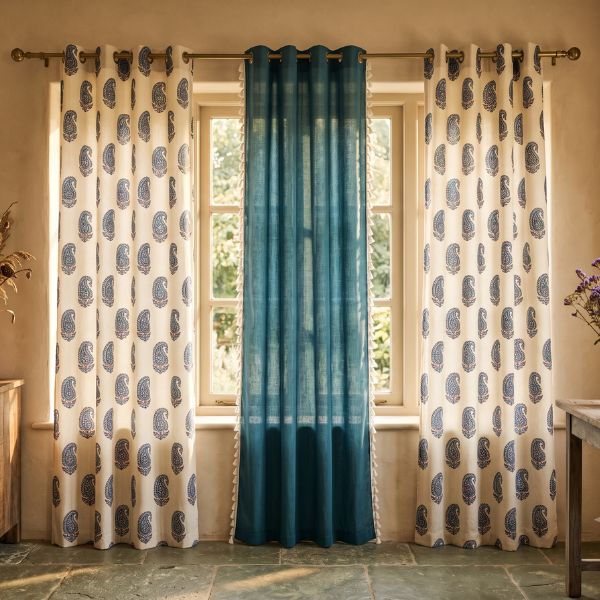
A curtain rod is a horizontal fixture installed above a window. Curtains hang from it using eyelets, rings, loops, hooks or another compatible heading style.
Because the rod remains visible, it becomes part of the interior design. Its finish, colour, thickness, brackets and decorative end pieces all contribute to the room’s appearance.
Curtain rods are commonly available in matte black, brushed brass, chrome, antique gold, bronze, natural wood and painted metal. A slim black rod may complement a contemporary interior, while a wooden or antique brass rod may suit a warmer or more traditional room.
The finish should connect naturally with other elements in the space. For example, the rod can coordinate with lighting fixtures, furniture hardware, door handles or metal accents to create a cohesive look.
Its proportions are equally important. A very thin rod may look weak against heavy blackout curtains, while an oversized or highly decorative rod can overwhelm a minimal interior. The rod should feel balanced in relation to the width of the window and the weight of the curtain fabric.

When Should You Choose Curtain Rods?
Curtain rods are ideal when you want the hardware to remain visible and add character to the room.
They work particularly well in relaxed, contemporary, transitional and traditional interiors. They are also practical for homes without a false ceiling, rooms where construction has already been completed and spaces where structural modifications are not possible.
Rods are generally easier to add to an existing home because they do not require a built-in pelmet or recessed ceiling pocket. This makes them suitable for smaller renovations, rented homes and simple curtain upgrades.
They also work naturally with eyelet curtains because the fabric passes directly over the rod. Curtains hung from rings can create a casual, tailored or traditional appearance depending on the fabric and heading style.
However, the rod must be strong enough to support the curtain weight. Heavy blackout fabrics, lined curtains and wide windows may require thicker rods, stronger brackets or additional centre supports.
Installation height also matters. A rod placed immediately above the window frame can make the window and room appear shorter. Installing it closer to the ceiling usually creates a taller and more elegant curtain line.
The rod should also extend beyond both sides of the window wherever possible. This allows the curtains to stack against the wall rather than covering the glass when open. It increases natural light and can make the window appear wider.
What Is a Curtain Pelmet?
A curtain pelmet is a structured covering installed above the curtains to hide the operating hardware.
It is important to understand that the pelmet does not operate the curtains. The curtain track positioned behind or inside the pelmet is the mechanism that allows the curtains to open and close. The pelmet simply conceals the track, hooks, runners and other functional components.
A pelmet may be integrated into a false ceiling, constructed using wood or board, upholstered in fabric, finished with paint or laminate, or designed as a recessed ceiling pocket.
Regardless of how it is made, its purpose is to create a cleaner transition between the ceiling and curtain fabric.
When designed correctly, the curtain track disappears from view and the curtains appear to flow directly from the ceiling. This creates a more seamless, structured and architectural finish.
Pelmets are also useful for hiding multiple tracks when sheer and main curtains are installed together. Instead of seeing separate channels and hooks, the viewer sees only the finished curtain layers.

When Should You Choose a Pelmet?
Choose a pelmet when you want the curtain hardware to remain hidden and the fabric to become the main visual element.
Pelmets work particularly well in modern and minimalist interiors, floor-to-ceiling curtain installations, formal living rooms and hotel-style bedrooms. They are also suitable for layered sheer and blackout curtains, ripple-fold styles, wide windows and motorised curtain systems.
A pelmet is often preferred when the room needs a clean and continuous curtain line. Since the track is concealed, there is less visual interruption between the ceiling and the fabric.
However, the proportions of the pelmet must be carefully planned. A shallow pelmet may not provide enough space for the curtain track and fabric folds. An oversized pelmet can feel bulky and visually reduce the ceiling height.
Its depth should account for the number of curtain layers, fabric thickness and selected pleat style. A double-layer system with sheer and main curtains requires more clearance than a single curtain.
The fabrics should move freely without rubbing against each other, the wall, the window frame or the inside of the pelmet. Insufficient clearance can cause uneven folds, friction and difficult operation.
Curtain Rod vs Pelmet: Quick Comparison

Neither option is automatically more premium. A well-proportioned rod can look sophisticated, while a poorly planned pelmet can feel heavy or awkward.
The decision ultimately depends on whether you want the hardware to contribute to the room’s design or disappear behind the curtain fabric.
Curtain Track vs Rod: What Is the Difference?
The curtain track vs rod decision is related to the rod vs pelmet comparison, but the terms do not mean the same thing.
A curtain rod is usually visible and decorative. Curtains may slide directly over it through eyelets or hang from rings and hooks.
A curtain track is mainly functional. It contains runners or carriers that travel through a channel, allowing the curtains to open and close smoothly.
Tracks can be wall-mounted or ceiling-mounted. They may remain visible or be concealed inside a pelmet or false-ceiling recess. They can also support manual or motorised systems.
A pelmet is simply the covering that hides the curtain track. It is not the operating mechanism.
This means you can install a visible curtain track without a pelmet. You can also conceal a track behind a pelmet for a more seamless appearance. A decorative rod is generally intended to remain visible and therefore does not require a pelmet.
When comparing a curtain track vs rod, tracks are usually better for wide windows, layered curtains, ripple folds and motorisation. Rods are more suitable when you want the hardware to add decorative character.

How Curtain Hardware Affects Pleat Style
The choice of rod or track influences which curtain pleat styles can be used and how the fabric will fall.
Eyelet curtains are designed to slide directly onto a curtain rod. The rod remains visible through the eyelets and becomes an intentional part of the design.
Curtains suspended from rings also require a visible rod. Depending on the fabric, hardware finish and heading, this can create a relaxed, traditional or tailored look.

Ripple-fold curtains rely on a specialised track system that maintains evenly spaced, wave-like folds. They generally look best when the track is concealed inside a pelmet or recessed ceiling pocket.

Pinch pleats, pencil pleats and several other curtain pleat styles can work with rods or tracks, although the final appearance changes according to the hardware.
The hardware also affects curtain fullness. Fullness refers to the amount of fabric used in comparison with the width of the rod or track. It determines whether the curtains look rich and structured or relatively flat when closed.
If there is insufficient depth inside the pelmet, fuller curtains may become compressed. If the rod or track is not strong enough, heavy fabric can sag, pull unevenly or become difficult to operate.
The curtain fabric, pleat style, fullness and hardware should therefore be selected together rather than treated as separate decisions.
Why Curtain Planning Should Happen Before the False Ceiling
One of the most common curtain-planning mistakes is completing the false ceiling before deciding how the curtains will be installed.
A concealed curtain track needs adequate space inside the ceiling pocket or pelmet. If the recess is too narrow, the curtains may rub against each other, touch the wall or fail to form proper folds.
Layered curtains require additional clearance because the sheer and main curtains operate on separate tracks. Their movement should not be obstructed by window handles, sliding doors, furniture or air-conditioning units.
The design must also account for curtain stack-back, which is the amount of space occupied by the curtains when fully open. If the rod or track does not extend sufficiently beyond the window, the stacked fabric may block a large portion of the glass.
Maintenance access is another important consideration. A concealed track should still be reachable if the runners, hooks, motor or other components need to be repaired or replaced later.
If these details are addressed only after the ceiling is complete, the room may require avoidable rework. In other cases, homeowners may have to settle for visible tracks or a curtain style that was not part of their original plan.
Curtain planning should therefore happen alongside false-ceiling design, electrical work, air-conditioning placement and furniture planning.
Rods, Pelmets and Motorised Curtains
Motorised curtains generally operate through a curtain track rather than a decorative rod.
A motor moves the curtain carriers along the track, allowing the curtains to open or close through a remote control, wall switch, mobile application or compatible home-automation system.
Motorised tracks can remain visible, but they usually create a cleaner finish when concealed inside a pelmet or false-ceiling recess.
Planning a motorised curtain system involves more than selecting the motor. The system needs a nearby electrical point, enough space for the motor, suitable track strength and sufficient clearance for the curtain fabric to move.
The weight of the curtains and width of the window help determine the required motor strength. The design should also consider whether the curtains will open from one side or separate from the centre.
The motor is typically installed at one end of the track, so the pelmet must provide enough room around it. It should not tightly enclose the motor or prevent future servicing.
You can explore these requirements in our guide to motorised curtains for modern homes.
If motorisation is considered only after the false ceiling and electrical work are complete, additional modifications may be required. It is better to finalise the motorised curtain track before these stages are finished.

How Ceiling Height and Window Size Affect the Decision
The room height and window size can influence whether a curtain rod or pelmet looks more appropriate.
In rooms with high ceilings, both systems can work well. A rod installed close to the ceiling creates a tall and dramatic curtain line, while a concealed pelmet can make the curtains appear integrated with the architecture.
In rooms with lower ceilings, a deep or bulky pelmet may make the space feel shorter. A slim recessed pocket or a simple rod positioned higher above the window may create a lighter effect.
For narrow windows, extending the rod or track beyond the frame allows the curtains to sit against the wall when open. This reduces obstruction and makes the window look wider.
For wide windows, corner windows and full-height glass doors, tracks are often more practical because they can support longer spans and heavier fabrics. Depending on the width, the installation may need reinforced tracks, specialised brackets or centre supports.
The scale of the hardware should always be proportionate to the window, curtain weight and
room dimensions.
Which Option Looks More Premium?
Pelmets are frequently associated with premium, hotel-like interiors because they conceal the track and create an uninterrupted curtain line.
However, installing a pelmet does not automatically make a room look luxurious.
A poorly proportioned pelmet can look bulky, while an elegant and correctly sized rod can look highly refined. The right choice depends on the design of the room and how thoughtfully the complete curtain system has been planned.
Fabric quality, fullness, pleat style, hardware finish, installation height, curtain length, ceiling design and window proportions all affect the final result.
A matte-black rod may complement a contemporary room perfectly. A brushed-brass rod can add warmth to a formal living room. A concealed track may be more suitable for a minimalist interior where the fabric should remain the primary focus.
Premium curtains look premium when every detail works together—not simply because the hardware is hidden.
Common Curtain Hardware Mistakes to Avoid
A common mistake is selecting the curtain fabric first and leaving the rod or track decision until the end. This can restrict the available pleat styles, curtain fullness and number of layers.
Another mistake is installing the hardware too close to the window. This can reduce visual height, block natural light and prevent the curtains from stacking properly.
With pelmets, insufficient depth is one of the most frequent problems. The fabric may rub against the wall, sheer layer or window frame, resulting in uneven folds and difficult movement.
Weak rods can bend under the weight of heavy curtains. Tracks that do not extend beyond the window may cause the open curtains to block the glass. Decorative rods that do not complement the room can also make the installation feel disconnected.
Motorised systems may face problems when no electrical point has been provided or when there is inadequate room for the motor. Concealed tracks can become difficult to maintain when no servicing access has been considered.
Most of these issues can be prevented through accurate measurement and a professional site assessment before the curtain system is finalised.
The Simple Rule for Choosing Between Rods and Pelmets
If you want the curtain hardware to be seen, choose a rod. If you want it to disappear, choose a pelmet.
Everything else follows from this simple rule.
-
Choose a curtain rod when you want the hardware to add colour, contrast or decorative character.
-
Choose a pelmet with a concealed curtain track when you want the hardware to disappear and the curtains to look cleaner and more architectural.
-
Rods feel lighter, more relaxed and more expressive. Pelmets feel sharper, more seamless and more structured.
The best option is not necessarily the one that appears more expensive in isolation. It is the one that suits the curtain style, window dimensions, ceiling design, room proportions and functional requirements.
Plan Your Curtain Hardware Before Installation
Curtains should never be planned as fabric alone. The fabric, curtain style, fullness, hardware, mounting height, pelmet clearance and finished length must all work together. At D’Moksha, our stylists assess your windows, ceiling, furniture placement, natural light and interior style before recommending the right solution. An at-home consultation allows the curtain system to be evaluated in the actual space rather than through a small swatch or catalogue.
Book a curtain design consultation before finalising your false ceiling, rods or tracks. Our team will help you plan the right fabric, curtain style, hardware and installation so the finished curtains look beautiful and function smoothly.