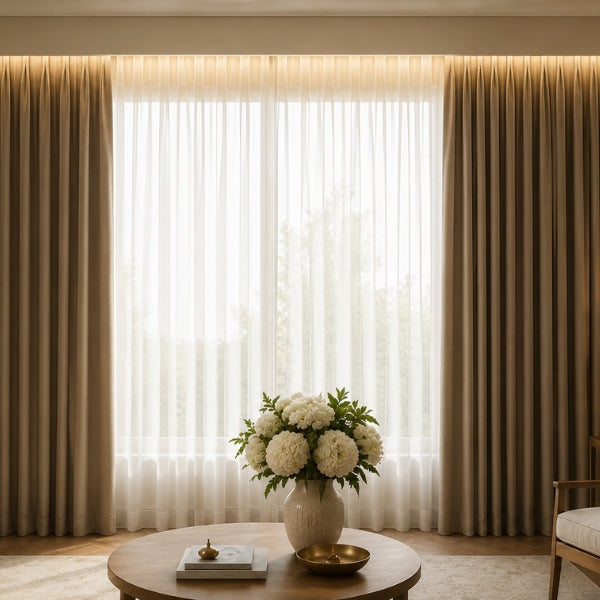
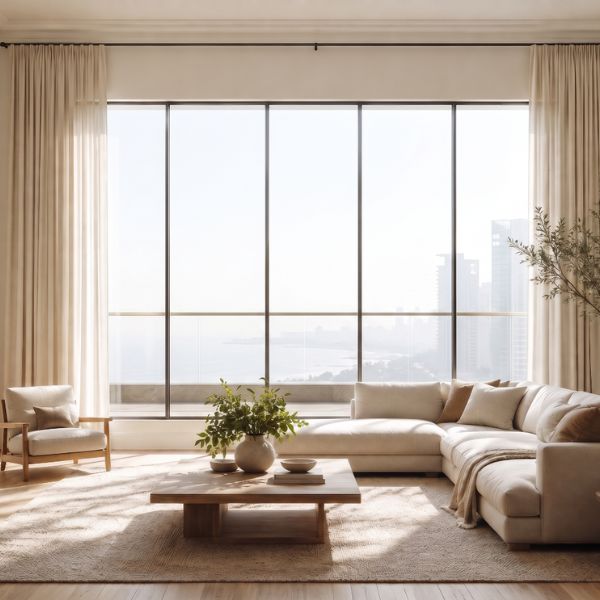
Choosing curtains is not just about finding the right colour or picking a fabric that looks beautiful on a swatch.
Curtains affect how much sunlight enters your home, how private a room feels, how often the fabric needs maintenance and, ultimately, how comfortable the space is to live in.
That is why one of the most important decisions while buying curtains is choosing between natural and synthetic curtain fabrics.
Natural fabrics such as cotton, linen and silk are known for authentic texture, softness and premium character. Synthetic or man-made fabrics such as polyester are generally chosen for durability, easier maintenance and more consistent everyday performance.
Neither is automatically better.
The best curtain fabric for Indian homes depends on your lifestyle, room usage, sunlight exposure, maintenance expectations, budget and the look you want to achieve.
Understanding these differences before buying can help you avoid expensive mistakes later.

Why Curtain Fabric Choice Matters More Than It Seems
Imagine choosing beautiful pure cotton curtains for a large window because you love the softness and natural texture.
They look perfect when installed.
But the window receives strong afternoon sunlight every day. Over time, the colour may change, and depending on the fabric and care method, shrinkage can also become a concern.
Now imagine investing significantly more in pure linen or silk curtains.
The material may feel luxurious and look exceptional, but natural fabrics often require greater attention to cleaning, wrinkles, sunlight exposure and long-term care.
The lesson is not that natural fabrics are difficult or that synthetic fabrics are always safer.
The real lesson is simple:
A beautiful fabric is not automatically the right curtain fabric for every home.
How a curtain performs depends on several things — fibre, weave, colour, lining, stitching, sunlight, room conditions and maintenance.
This is why choosing curtains only from a small fabric swatch can be misleading.
What Are Natural Curtain Fabrics?
Natural curtain fabrics are made using fibres that originate from plant or animal sources.
The most common options include cotton, linen and silk.
Cotton Curtains
Cotton is one of the most familiar natural fabrics used in Indian homes.
It can feel soft, warm and comfortable, and it works across many interior styles. Depending on its weave, thickness and construction, cotton can create anything from a casual look to a more structured finish.
Cotton curtains are often suitable for bedrooms, living rooms and relaxed interiors.
However, pure cotton can require more careful maintenance than many synthetic alternatives. Depending on quality, treatment and washing conditions, shrinkage may occur. Strong sunlight can also affect colour over time.
This makes the common comparison of cotton vs polyester curtains important.
Cotton usually wins on natural feel and softness. Polyester generally offers easier care and more predictable performance.

Linen Curtains
Linen is often chosen for its texture.
It has an understated, sophisticated appearance that works especially well in minimalist, organic and premium interiors.
Unlike fabrics designed to appear completely smooth, linen naturally has movement and slight irregularity. That texture is part of its charm.
But linen also creases more easily than many synthetic fabrics.
For homeowners comparing linen vs polyester curtains, the choice often comes down to character versus convenience.
Linen offers natural texture and authenticity. Polyester offers greater wrinkle resistance and easier everyday upkeep.

Silk Curtains
Silk sits at the more luxurious end of natural curtain materials.
It has richness, depth and a distinctive surface that can create a strong visual statement in formal living rooms, premium bedrooms and sophisticated interiors.
But silk requires careful use.
Direct sunlight, handling and cleaning methods can affect how the fabric looks over time. Silk curtains therefore work best when their placement, lining and maintenance are planned properly.

Pros and Cons of Natural Curtain Fabrics

What Are Synthetic or Man-Made Curtain Fabrics?
Synthetic curtain fabrics are made using manufactured fibres.
Polyester is the most common example, although many modern curtain fabrics also use blends that combine different fibres to improve texture, drape or performance.
The main advantage of high-quality man-made fabrics is consistency. They are generally easier to maintain, resist everyday wrinkles better and are often more dimensionally stable than pure natural fibres. This makes them especially practical for frequently used rooms.
Modern synthetic fabrics have also changed significantly in appearance. A good-quality polyester curtain does not necessarily have to look shiny or artificial. Depending on the weave and finish, it can look matte, textured, soft or even linen-inspired. The important point is quality.
Cheap synthetic fabric may look flat or drape poorly. Premium man-made fabric can look refined while offering strong practical advantages.

Advantages of Synthetic Curtain Fabrics
For busy households, synthetic curtain fabrics can make everyday living easier.
They are particularly useful in spaces where curtains are opened and closed frequently, exposed to regular handling or expected to remain neat with limited maintenance.
High-quality synthetic curtains can offer:
-
Better resistance to everyday wrinkles
-
Lower shrinkage risk than many pure natural fabrics
-
Easier routine maintenance
-
More consistent shape and drape
-
Greater budget flexibility
-
A wide variety of colours and textures
-
Practical performance for frequently used rooms
This is why low-maintenance curtain fabric is often associated with polyester and synthetic blends.
However, synthetic does not mean maintenance-free. Sunlight, fabric quality, heat, washing methods and construction still affect long-term performance. The goal should not be to find a fabric that requires no care. It should be to choose a fabric whose care requirements fit your lifestyle.
Natural vs Synthetic Curtain Fabrics at a Glance

This table makes one thing clear: the difference is not simply luxury versus budget.
It is a question of priorities.
Which Curtain Fabric Looks More Premium?
This depends on what premium means to you.
If premium means authentic texture, tactile depth and natural character, linen and silk are strong choices.
If premium means beautiful drape, clean appearance, consistent performance and easier maintenance, a high-quality synthetic fabric or blend can also look extremely sophisticated.
The final appearance of a curtain depends on much more than fibre.
Pleat style, fullness, lining, curtain height, stitching quality, track selection and installation all affect how expensive and polished a curtain looks.
A beautifully stitched premium polyester curtain can look far better than an incorrectly designed pure linen curtain.
Best Curtain Fabric for Indian Weather and Sunlight
Climate should play a major role in curtain selection.
Indian homes can experience strong sunlight, high temperatures, humidity, dust and large seasonal changes depending on location.
A fabric that performs well in a shaded bedroom may behave very differently on a west-facing living-room window receiving harsh afternoon sun.
Strong sunlight can gradually affect colour.
This makes curtain fabric for Indian weather a more practical search question than simply asking which fabric looks best.
For high-sunlight rooms, consider:
-
How many hours of direct sunlight the window receives
-
Whether the curtain will remain closed during peak sun
-
Whether lining is required
-
Whether the chosen colour is likely to show fading easily
-
How frequently the curtains will be cleaned
-
Whether the homeowner is comfortable with natural wrinkling or fabric movement
The best curtain fabric for sunlight is therefore not decided by fibre alone.
Fabric quality, colour, construction and lining all matter.

Cotton vs Polyester Curtains: Which Is Better?

Choose Curtain Fabric According to the Room
The smartest curtain strategy is often not to use one material throughout the house. Different rooms have different needs.
-
Formal Living Room: Linen, silk or a premium textured blend can add richness, depth and a more refined finish.
-
Bedroom: Choose a fabric that works well with blackout or dim-out lining while remaining easy to operate and maintain.
-
Family Room / High-Use Spaces: Durable synthetic fabrics or performance blends can be a practical choice for frequent everyday use.
-
Guest Room: Cotton, linen blends or softer fabrics can create a comfortable, welcoming feel without demanding the same level of performance as high-use areas.
-
Sun-Facing Rooms: Consider fabrics with better fade resistance, suitable colours and the right lining to help manage strong sunlight.
-
Low-Use or Decorative Spaces: Natural cotton, linen or other texture-led fabrics can work beautifully when maintenance and frequent handling are less of a concern.
Instead of choosing natural or synthetic fabrics for the entire home, think room by room.
Why Seeing Full-Length Fabric at Home Matters
A small swatch cannot show how a fabric will truly look in your space. Colour, transparency, texture and drape can change significantly depending on the scale of the curtain and the lighting in your home.
Seeing full-length fabric at home helps you understand how it works with your daylight, walls, furniture, flooring and overall interior theme. It also makes it easier to compare natural and synthetic fabrics in the environment where they will actually be used.
Choose the Best Curtain Material for Your Lifestyle
Natural and synthetic curtain fabrics both have their strengths. Choose natural fabrics for authentic texture and richness, synthetics for easier maintenance and durability, or a blend for the best of both. The right curtain material is simply the one that suits your room, climate and lifestyle.
See Your Curtain Fabric in Your Own Home
At D’Moksha, curtain selection starts with understanding your space rather than asking you to make an expensive decision from a small swatch. Based on your needs and design brief, D’Moksha brings full-length natural and man-made curtain fabrics to your home.
You can see how each option looks in your own daylight, against your walls, furniture, flooring and interior theme. You can compare the texture, transparency, colour, drape and overall feel before making the final choice.
Whether your curtain budget is ₹20,000 or ₹2 lakh, the principle remains the same:
The right decision should be made before the curtain is stitched, not after the regret begins.
Curtains stay with you for years. They influence light, privacy, comfort and how a room feels every single day. Book a free D’Moksha home visit to compare natural and synthetic curtain fabrics in your own space and understand which one genuinely suits your lifestyle.
The best curtain is not simply natural or synthetic. It is the one you understand before you buy.