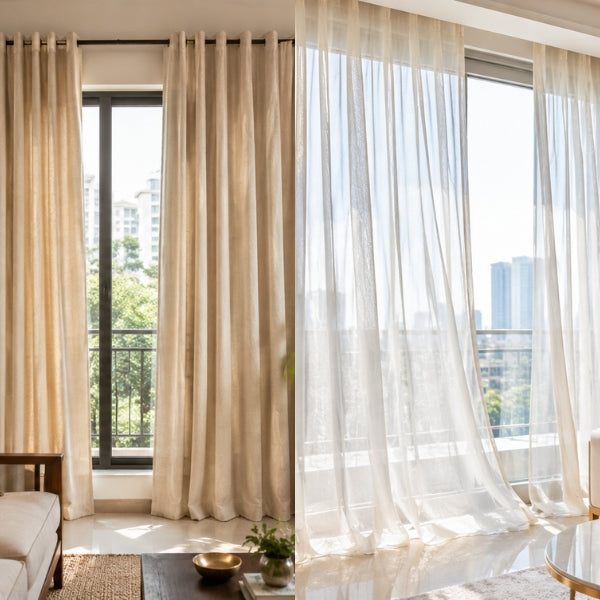
A living room does not always need more square footage to feel spacious. Sometimes, the way the windows are framed can change how tall, wide and open the room appears.

Curtains influence the perceived height of the ceiling, the apparent width of the windows and the amount of natural light entering the space. When they are hung too low, fitted too narrowly or made from bulky fabrics, they can make the room feel smaller than it is.
If you are wondering how to make a living room look bigger with curtains, focus on three elements: height, width and fabric.
The three most effective curtain tricks are:
-
Hang the curtains higher than the window.
-
Extend the rod or track beyond the window frame.
-
Choose light, flowy fabrics with a soft drape.
These principles apply to both curtain rods and tracks, depending on the curtain style and installation.

1. Hang Curtains Higher to Make the Ceiling Look Taller
One of the simplest ways to make a small living room feel larger is to install the curtain rod or track above the window frame rather than directly over it.
When the hardware is positioned only an inch or two above the window, the eye focuses on the actual height of the opening. The unused wall above it becomes more noticeable, which can make the ceiling appear lower.
Raising the curtain hardware creates a stronger vertical line. It visually connects the upper wall to the floor, making the window appear taller and improving the proportions of the room.
How high should you hang curtains?
As a general guideline, mount the curtain rod or track approximately 6 to 8 inches above the window frame.
If there is limited space between the window and ceiling, place the hardware roughly halfway between them. A ceiling-mounted track can also create a clean, modern appearance when a floor-to-ceiling look is desired.
The right height depends on the ceiling, available wall space, false ceilings, pelmets, AC units, curtain layers and nearby furniture.
The aim is not simply to position the hardware as high as possible. The curtain should still feel connected to the window and remain proportionate to the wall.

Use floor-length curtains
High-mounted curtains work best when the panels extend to the floor. This creates an uninterrupted vertical line that makes the wall and ceiling feel taller.
Ideally, curtains should lightly touch the floor or finish just above it. Short curtains interrupt the line and divide the wall into smaller visual sections, which can make the room appear more compact.
Excessive puddling should generally be avoided in a small living room. Although extra fabric can suit formal interiors, it may add unnecessary bulk around the window.
A precise, made-to-measure curtain length usually creates a cleaner and more spacious appearance. Accurate measurements are especially important when the floor is uneven or the curtain track runs across a wide wall.
Floor-to-ceiling curtains are especially effective because they shift attention away from the window’s actual height.
The panels should also hang straight, as twisting or uneven folds can interrupt the clean vertical line.

2. Extend the Rod or Track Beyond the Window Frame
Curtain height changes how tall a room appears. Curtain width changes how broad and open it feels.
A common mistake is choosing a rod or track that ends almost exactly at the edges of the window. When the curtains are opened, the fabric continues to cover part of the glass, making the window look narrower and limiting natural light.
Extending the hardware beyond the window allows the curtain panels to rest against the wall instead of sitting in front of the glass.

How far should the rod extend?
A useful guideline is to extend the rod or track approximately 6 to 12 inches beyond the window frame on each side.
The exact distance depends on the available wall space, curtain thickness, fullness, pleat style and nearby furniture, cabinets, switches or décor.
For narrow windows, a wider rod can create the impression of a broader opening. For larger windows, the additional width gives the curtains enough room to sit neatly at the sides.
This is one of the easiest ways to understand how to make windows look bigger with curtains. The eye reads the total curtain arrangement as the window area, so extending the hardware creates a wider visual boundary.
It also exposes more glass when the curtains are open, allowing additional daylight into the room and reducing visual heaviness around the window.

Allow enough stack-back space
Open curtains occupy a stack-back area that must be considered when choosing the rod or track width. Thick, lined, layered or high-fullness curtains need more space than lightweight panels; otherwise, the fabric may still cover part of the glass.
For several windows placed close together, a continuous curtain track can create a more unified appearance than multiple short rods. It reduces visual breaks and makes the entire wall feel broader.
The extension should remain proportionate to the wall and nearby furniture.
3. Choose Light, Flowy Curtain Fabrics
Curtain fabric influences how much space the treatment occupies, how naturally it falls and how light moves through the room.
Heavy, stiff or highly structured curtains can look luxurious, but they may visually dominate a compact living room. They also require more stacking space, which can reduce the visible width of the window.
Lighter fabrics create a softer frame and help the room feel less crowded. They move easily, form cleaner folds and allow the window area to remain visually open.

Best curtains for a small living room
Suitable options include sheers, semi-sheers, lightweight linen or linen-look fabrics, and soft blends with a fluid drape.
The right fabric depends on the direction of the window, the amount of sunlight and the level of privacy required.
A transparent sheer may work well in a living room that is not directly overlooked. A semi-sheer fabric can provide greater daytime privacy while still allowing filtered light into the room.
Use layered curtains for privacy
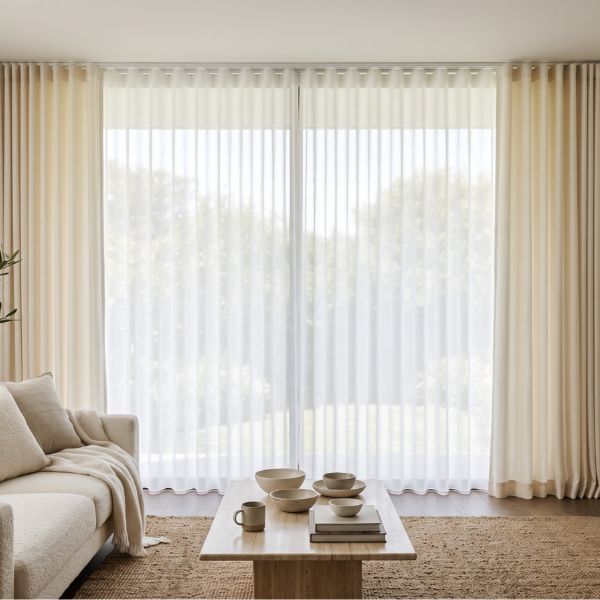
A layered system combines a sheer near the window with a main curtain in front. The sheer provides filtered daylight and partial daytime privacy, while the main curtain offers stronger privacy at night.
To keep the treatment visually light, choose a main curtain with a smooth drape rather than a stiff or bulky fabric.

Light fabrics still need proper construction
Lightweight fabric should not look limp or poorly finished. It still requires enough body to create neat folds and hang evenly.
Poor stitching or unsuitable construction can cause the curtain to twist, flare at the bottom or form irregular pleats. These issues make the window treatment look untidy and work against the feeling of spaciousness.
Whenever possible, view the fabric as a full-length hanging panel instead of relying only on a small swatch.
A full-length panel shows how the fabric filters light, forms pleats, creates volume and works with the room’s colours. A swatch may show texture and shade, but it cannot accurately reveal how the curtain will look across the entire window.
Avoid excessive fullness, as too much fabric can overwhelm a narrow wall and increase the curtain’s stacking space.
Choose Colours and Patterns That Maintain Continuity
Curtain colour affects how smoothly the eye moves across the room.
Curtains that are close to the wall colour create a more continuous visual surface. Strong contrast divides the wall into separate sections, while tonal combinations make the space feel calmer and less interrupted.
Pair warm white, beige or greige walls with tonal shades such as ivory, cream, taupe or natural linen.
Dark curtains are not automatically unsuitable for compact rooms. They can work well when the room receives sufficient daylight, the overall palette is coordinated and the fabric has a fluid rather than bulky drape.
Patterns should also be chosen carefully. Large, high-contrast designs can become visually dominant and make the window wall feel busy.
For a more spacious appearance, consider plain fabrics, fine woven textures, subtle vertical lines, tone-on-tone patterns or small-scale designs.
Vertical details can reinforce the sense of height, particularly when the curtains extend from near the ceiling to the floor.
If the living room already contains patterned upholstery, rugs or cushions, simpler curtains will usually create better visual balance

Keep the Window Area Clear
Keep furniture and décor away from the window so the curtains can open, close and fall freely.
Sofas, consoles and storage units should not cause the fabric to bunch or bend. Position tiebacks loosely enough to preserve the curtain’s natural folds and visible window width.
A clear window area also allows more daylight to enter and helps the curtain treatment appear lighter and better proportioned.
Common Curtain Mistakes That Make a Living Room Look Smaller
-
Hanging curtains too low: This emphasises the window’s actual height.
-
Using narrow hardware: The open curtains continue to cover the glass.
-
Choosing short curtains: This interrupts the vertical line.
-
Using excessive bulk: Thick layers or excessive fullness can overwhelm a compact wall.
Three Small Curtain Changes Can Make a Big Difference
To make a living room look bigger with curtains, mount them higher, extend the hardware beyond the window and choose fabrics that keep the treatment visually light.
Accurate curtain length, suitable fullness and enough stacking space will make the final result feel cleaner and more spacious.
At D’Moksha Homes, our curtain designers help you compare full-length fabrics in your home and select the right height, pleat style and hardware for your windows.
Book an at-home curtain consultation to create a living room that feels taller, brighter and better proportioned.