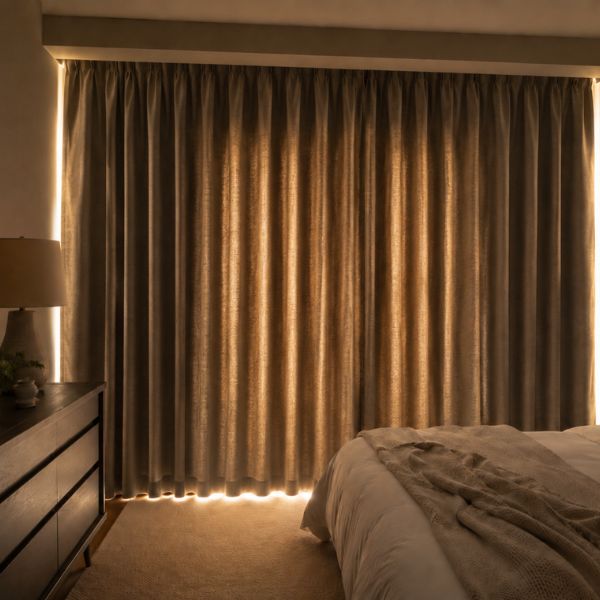
Motorised curtains and blinds can make your home feel effortless, modern, and premium. With one remote, switch, app, or voice command, you can open and close your curtains without touching them.
But motorised curtains need proper planning before installation. Once the curtains, blinds, ceiling work, wiring, tracks, and motors are installed, making changes later can become complicated and expensive.
That is why smart planning should happen early — not after the installation is done

Quick Answer: What Should You Plan Before Installing Motorised Curtains?
Before installing motorised curtains or blinds, plan the power point, motor strength, track type, curtain weight, wiring, and control system.
These details should ideally be finalised before ceiling work, electrical work, or curtain installation to avoid visible wires, rework, and performance issues.
Why Planning Matters for Motorised Curtains
Motorised curtains are not just about adding a motor to your curtain track. The final experience depends on power points, motor strength, curtain weight, window size, track placement, wiring, and control system.
If these details are not planned correctly, your curtains may stop halfway, move unevenly, make noise, or fail to close properly.
What should feel like high-end automation can quickly become a daily frustration.
1. Plan the Power Point First
The first thing to plan is the power point.
Motorised curtains and blinds need a nearby power source. If this is not planned early, you may end up with visible wiring, messy extensions, or unnecessary electrical rework later.
This is especially important if you are still finalising your interiors, false ceiling, wall finishes, or carpentry. Planning the power point in advance helps keep the installation clean and concealed.
A well-planned power point makes your motorised curtain setup look seamless instead of looking like an afterthought.

2. Choose the Right Motor
The second important decision is choosing the right motor.
A simple rule to remember: heavy, large curtains need a stronger motor. Smaller windows or blinds may work well with a basic motor.
The wrong motor can lead to uneven movement, extra noise, slow operation, or long-term performance issues.
For example, full-length curtains for large living room windows need more strength than compact blinds for a small study window. Similarly, heavy blackout curtains may need a more powerful motor than lightweight sheer curtains or blinds. Choosing the right motor ensures your curtains move smoothly, quietly, and reliably.

3. Decide the Control System Upfront
Before installing motorised curtains or blinds, decide how you want to operate them. You may prefer a remote, wall switch, mobile app, or voice automation through systems like Alexa.
This decision should be made early because adding or changing controls later may not always be seamless.
If you want your motorised curtains to work with your smart home setup, it is better to plan the integration before installation. That way, the system feels smooth from day one.
Also ask whether the motor has manual override or alternative operation options in case of power cuts or technical issues.

4. Plan the Track or Channel
Motorised curtains need the right track and enough space for smooth movement. If you are using false ceiling grooves or concealed channels, these should be planned before ceiling work is completed.
Poor track alignment can affect how smoothly the curtains open and close. The track should support the curtain weight, allow easy movement, and match the type of motor being used. This is especially important for large windows, full-length curtains, balcony doors, and wide living room openings.

What Happens When Planning Is Missed?
Small planning mistakes can create big everyday problems.
You may end up with visible wiring in the living room, a noisy motor at night, curtains that stop midway, or blinds that do not close properly.
Instead of feeling premium, the automation starts feeling inconvenient.
Motorised curtains should make life easier. They should open smoothly, close completely, and work exactly the way you expect every day.
Plan Before You Install
The best time to plan motorised curtains or blinds is before installation begins. Ideally, this should happen while you are still planning your electrical points, ceiling work, curtain channels, and window treatments.
That way, the power supply, motor type, track, wiring, and control system can all be planned together. This helps avoid rework, visible wires, wrong motor selection, and future regret.
The D’Moksha Way
At D’Moksha, we first visit your home and understand your windows, curtain size, fabric weight, power point location, track requirement, and preferred control system.
We help you plan the right motor type, wiring, track, and automation setup so the final installation feels effortless, smooth, and premium.
Before installing motorised curtains or blinds, book a D’Moksha planning visit. Our team will help you plan the power points, motor type, track, and control system properly — so your installation is smooth and you do not face regrets later.