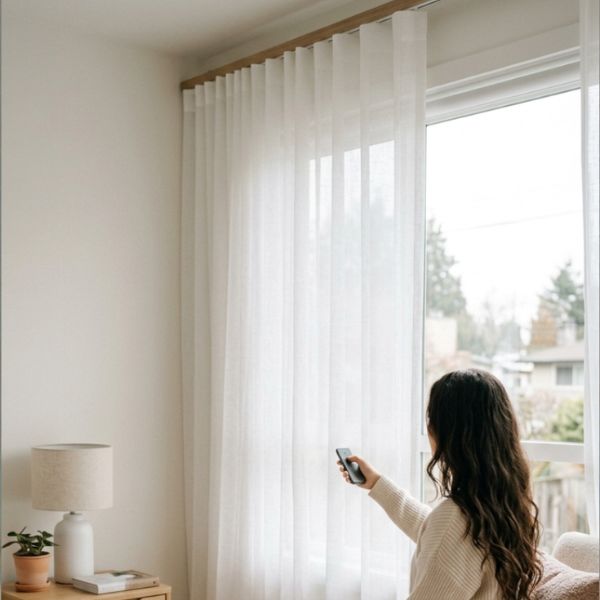
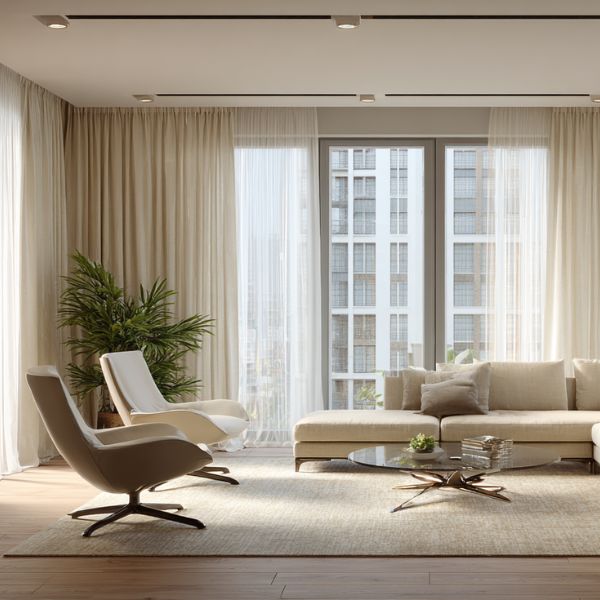
You bought blackout curtains expecting a dark, restful room. But even after closing them, sunlight still enters and the room still glows.
This is a common problem in many homes. The reason is simple: what you have may not be true blackout curtains. Many people are sold dimout curtains when they actually need blackout curtains.

Quick Answer
If your curtains are still letting light in, they may be dimout curtains, not true blackout curtains. Blackout curtains are designed to block light through the fabric, while dimout curtains reduce light but do not make the room fully dark. The final result also depends on window coverage, curtain fullness, track placement, and installation.

Blackout Curtains vs Dimout Curtains
Many homeowners use the words blackout and dimout as if they mean the same thing, but they perform very differently.


Blackout curtains are ideal for bedrooms, nurseries, home theatre rooms, and spaces where you need better sleep or glare-free screen time.
Dimout curtains are better for rooms where you want to soften harsh sunlight while still keeping some natural brightness.
Even Good Blackout Curtains Can Leak Light
A good blackout fabric can block light through the fabric, but that does not always mean the entire room will become completely dark.
Light can still enter from the sides, top, or bottom if the curtains are not measured or installed correctly.
For better blackout performance, curtains need enough width, proper fullness, good side coverage, and the right rod, track, or ceiling channel placement.

Why Your Curtains May Be Leaking Light
Your curtains may still be letting light in because:
-
The fabric is dimout, not true blackout.
-
The curtain does not fully cover the window.
-
Light is entering from the sides, top, or bottom.
-
The curtain width, length, or fullness is not planned properly.
-
The wrong rod, track, or installation style has been used.
-
The fabric is blackout, but the overall fitting is not sealed well enough.
For proper blackout performance, both the fabric and the installation matter.
Can Light-Coloured Curtains Be Blackout?
Yes. Light-coloured curtains can offer strong blackout performance if they are made with the right blackout fabric or blackout lining.
Many people assume only dark curtains can block light, but that is not always true. A good blackout fabric can deliver strong light control even in lighter shades like beige, ivory, grey, or pastels.
This is useful for Indian homes where homeowners want softer colour palettes without compromising too much on privacy, sleep comfort, or glare control.
Don’t Buy Blackout Curtains Without Testing Them
Never choose blackout curtains only from a catalogue image or a promise. A fabric may look good online, but its actual performance depends on your window size, sunlight direction, curtain coverage, and installation.
At D’Moksha, we help you choose blackout fabrics that offer strong light control without unnecessary bulk, even in lighter shades. During an at-home curtain trial, you can test the fabric on your own window and see how it performs in your actual room, against your real sunlight, window size, wall colours, and interiors.
Book a D’Moksha at-home curtain trial and choose your blackout curtains with confidence.